
Blog
Blog
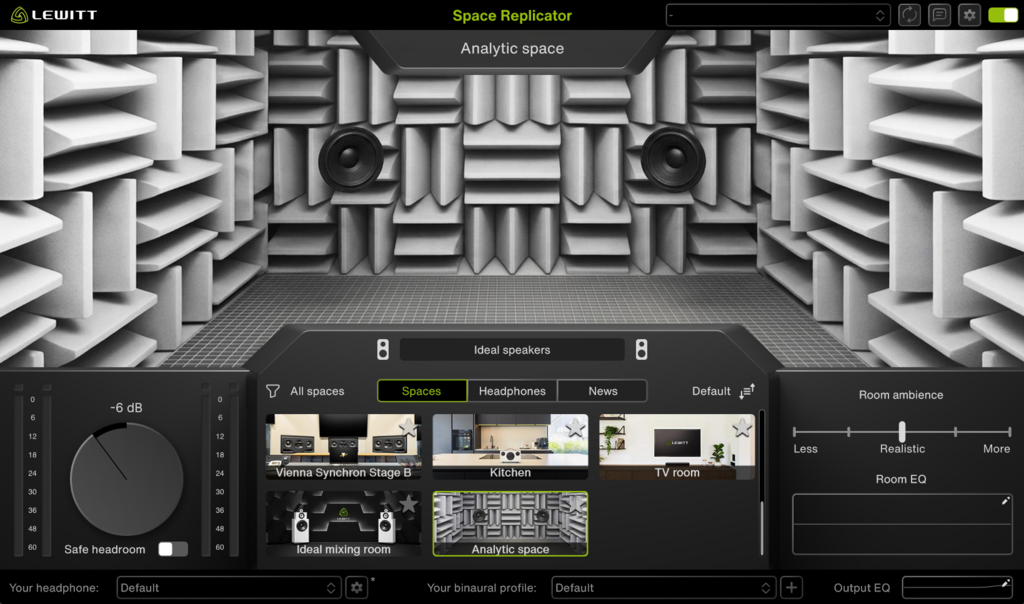
With the Space Replicator 2.0 update, we've added two new rooms to the already extensive list of spaces you can use: the Ideal mixing room and the Analytic space.
In this blog, we'll take a look at both and give you some context on why they're a great addition to your mixing toolkit.
When you start out mixing your music, chances are you start in your bedroom, living room, or office. These rooms are far from the perfect environment to mix in. Most likely, the room's dimensions and reflective surfaces will color the sound in a way that makes the audio that gets into your ears unreliable.
Some frequencies get masked, the room's dimensions create peaks and dips in the bass, and the flat surfaces all around you send back reflections that change what you hear. In the end, you can't fully trust what you're hearing.
How can you change it? How would an ideal mixing room look and sound? Thankfully, there are experts who answer this question for us.
The European Broadcasting Union and its standard for ideal mixing rooms.
The EBU is an alliance of public service media outlets. Their goal is to provide a center of learning and sharing for its members (radio stations, TV stations, and many more). You may have heard about LUFS to measure loudness. The EBU came up with this standard measurement, and now the international audio community uses it everywhere.
If anybody knows how an ideal mixing room should sound, and therefore should be designed, it's them. They've specified ideal room dimensions, material choices, speaker placements, and many more details for how an ideal mixing room should be built. You can check out the whole specifications here: https://tech.ebu.ch/docs/tech/tech3276.pdf
But even if you build this room ten times in ten different locations, there will still be subtle nuances that influence the sound. What type of studio desk do you use? What reflections does it create? Some details you simply can't get around, and they'll always shape the sound of the room.
We wanted to go one step further. We wanted to simulate an ideal mixing room without any unwanted reflections and no physics standing in the way. And with the new Ideal mixing room, that's exactly what we did.
We took the EBU standards and virtualized them. We created ideal speakers that would be physically impossible to build, and combined them with the ideal room dimensions and specifications. The result is a space with ideal dimensions, no unwanted reflections, and pure audio you can trust. A room that would be impossible to replicate in real life.
Here is an overview of what you get with the perfect mixing room
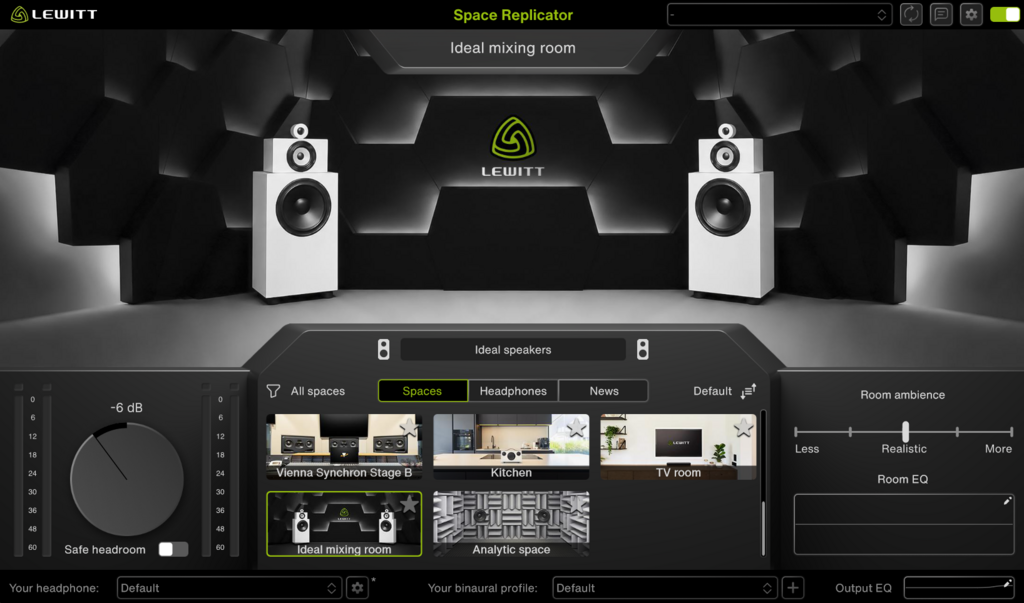
With the ideal mixing room, we got rid of all unwanted reflections. But what would your mix sound like without any reflections, wanted or unwanted? You can answer this question with the new Analytic space.
This space gives you access to a room without any reflections at all, but with a stereo image as if you were using ideal speakers. They are perfectly phase-coherent, so all frequencies hit your ears at the same time.
Related stories
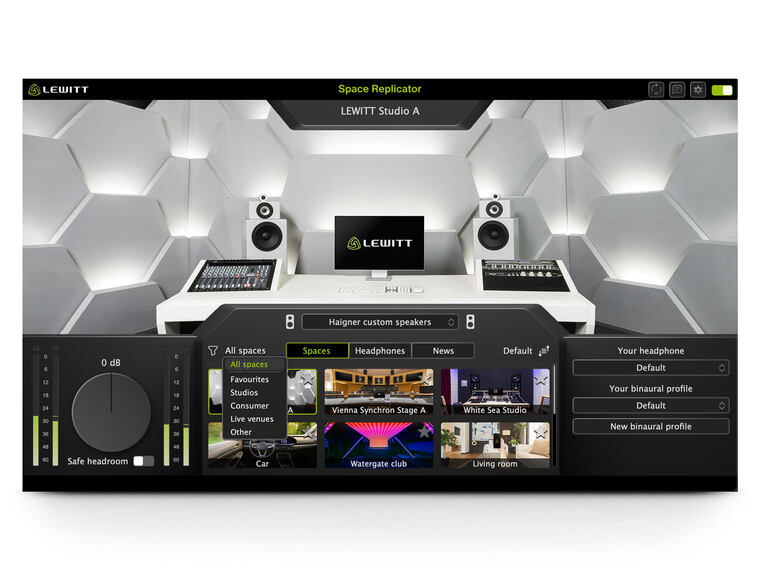
The tech behind the LEWITT Space Replicator plugin
Up until now, LEWITT offered microphones for recording and live performing and audio interfaces. What comes after recording? Mixing, correct! Space Replicator…
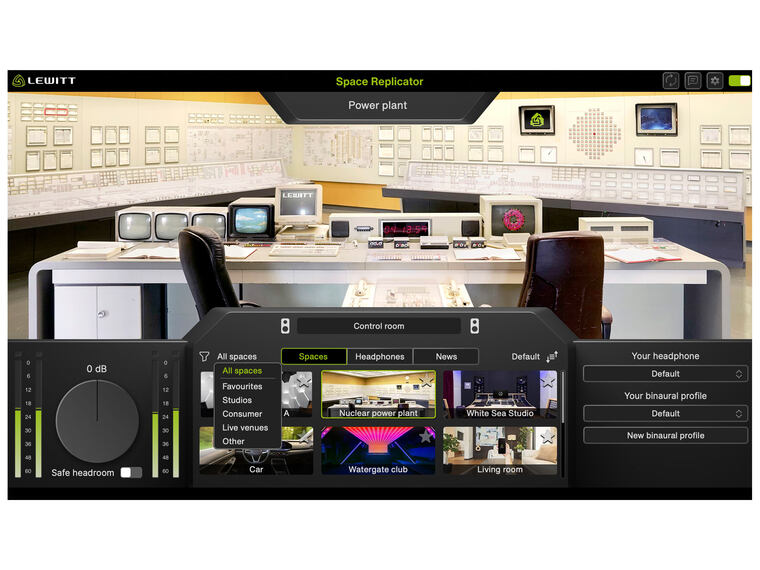
Content update for Space Replicator
LEWITT’s Space Replicator plugin lets you create better mixes by bringing professional studio spaces to your headphones. You can also check how your mix…
