
Blog
Blog
Sound Factory has been running sessions on Selma Avenue in Hollywood since the early 1960s. The Jackson 5 recorded "I Want You Back" here in 1969, Linda Ronstadt cut five albums with producer Peter Asher, and now modern pop innovators like Doja Cat and SZA have been making records in this legendary studio. When I sat down with the engineers and studio manager, I wanted to understand what makes a studio last and how recording equipment has evolved over the 50+ years this studio has been in operation.
The building that now houses Sound Factory was built in the early 1960s as an office for Moonglow Records, the label famous for signing the Righteous Brothers. Dave Hassinger, a well-known recording engineer, converted it into a studio and renamed it "The Sound Factory". And when Motown started traveling out more to Los Angeles and needed rooms, Sound Factory was one of the places they used. The Jackson 5 recorded "I Want You Back" here in 1969.
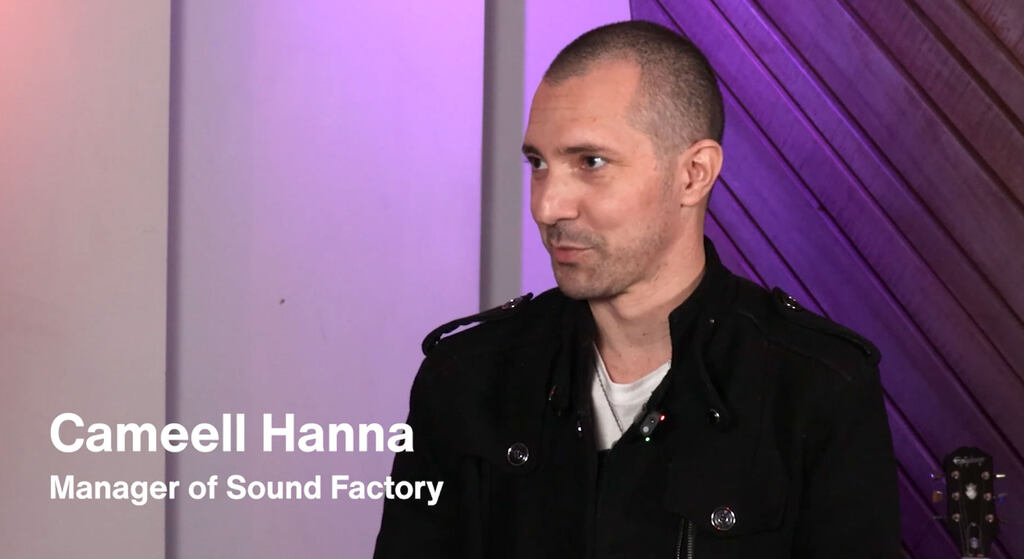
"Which really put this place on the map," Cameell Hanna, the studio's manager, told me.
Through the 1980s, Studio B became a home for new wave records. From iconic 80s classics like The Bangles' "Walk Like an Egyptian" and "Manic Monday" to Oingo Boingo's "Weird Science," Toni Basil's "Mickey," and Crowded House's "Don't Dream It's Over." What connected those sessions wasn't just the room, it was the fact that many of those artists were, at the time, new and without any major hits.
"Sound Factory was kind of the underdog studio," Cameell said.
"Newer artists who were cool but hadn't had the commercial success yet to get into the bigger rooms ended up here. But all of those underdogs eventually became huge."
That ethos hasn't changed. Sound Factory has been a launching place for many new pop innovators like Doja Cat who recorded her early LA recordings in these rooms. Other notable "underdog" artists who recorded early sessions here include H.E.R., Joji, Djo, Lizzo, and SZA. The studio even served as a home base for innovative producers like Mark Ronson, who worked there for four years. So it's clear from past to present, the studio is still bustling with creative energy and attracting forward-thinking artists.
Davide Cinci, Sound Factory's Head Engineer, walked me through Studio B first. "It's a beautiful room from the '70s with a unique sound," Cinci described as we walked into the room. He demonstrated how the adjustable acoustic panels along the walls can be turned to expose either an absorbing or a reflective face, giving engineers a range of sound options from tight and dry to open and lively.
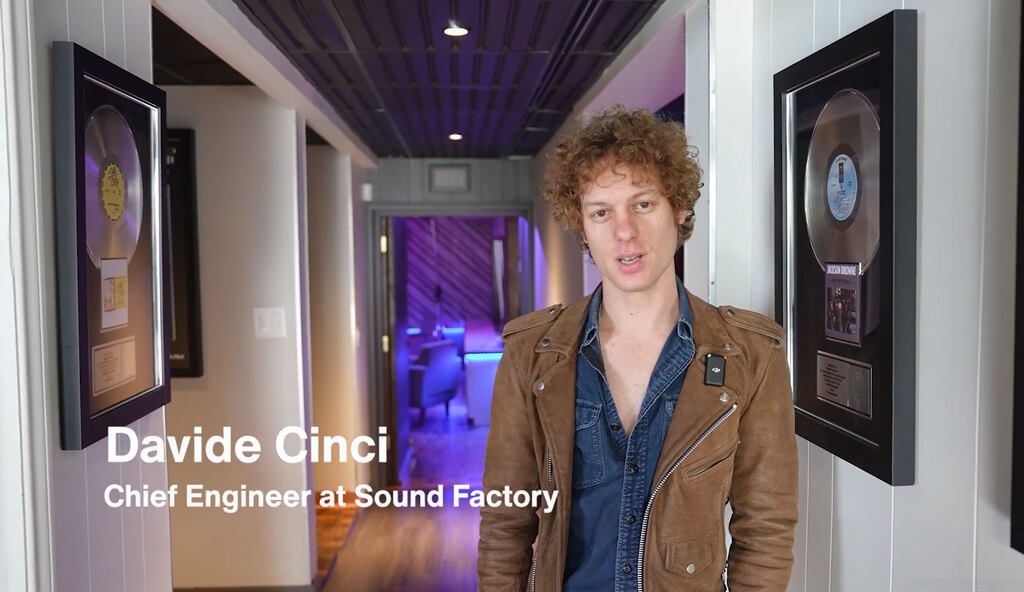
For drum sessions, Davide positions the kit under the structural beam. He says that area of the room creates a natural tightness and focus in the sound. His room mic approach typically involves a spaced pair of ribbon mics placed in the corners and another pair of small-diaphragm condensers for a closer room sound. He uses the LEWITT LCT 040 MATCH stereo pair for the close room mics, which also serve as floater mics for things like tambourine, acoustic guitar, and shaker.
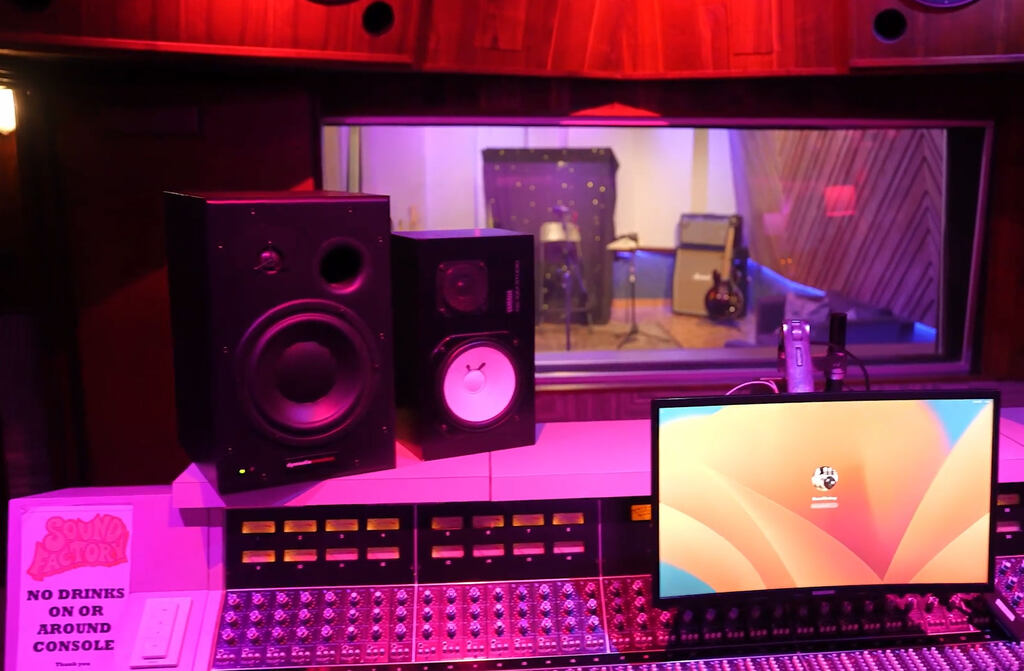
In the control room of Studio B, we find a rare prototype API from 1971. This is one of the first five API mixing consoles ever designed according to Davide. While Sound Factory has been quick to embrace modern technology, it maintains an impressive collection of vintage gear that speaks to its history. There's something unique that happens when you're tracking through hardware that's been used on such iconic records that have defined musical eras. The control room also has a nice selection of different monitoring options to suite the preferences of different prodcuers, including classic Yamaha NS-10s, custom soffit-mounted Augspurgers, and 3-way Dynaudio nearfields.
"The LCT 140 [AIR] is my go-to for acoustic guitar, piano, room mics, and pretty much anything," - Davide Cinci, Chief Engineer, Sound Factory
His signal chain runs the LCT 140 AIR into a Great River preamp, through a Great River EQ (Neve 1081-style), and into an LA-2A compressor. The mic has two modes, FLAT and AIR, and for Davide's acoustic work in Studio B, FLAT is a great starting point.
As any good engineer knows, sometimes you have to work with the limitations of your space. "You end up using the room in ways you normally wouldn't" says Davide as he describes how the engineers at Sound Factory are known to set up speakers and mics in the bathrooms to use them as makeshift echo chambers. This practice dates back the 70's when they even had two dedicated channels on the console labelled "the shitter". One modern example of this technique that Davide could recall was for Djo's song "Slither". The team set up a full Slingerland drum kit with blue sparkle shells in the larger restroom for the final track with the drummer sitting on the toilet while playing. A humorous setup to imagine, but the compressed and distorted echo effect on the final track shows how effective this technique can be.
Studio A at Sound Factory is also called the Splice Room. Splice brings session musicians in regularly to record sample packs here, and creators come in to capture sounds. Rob Moreno is the Main Engineer in Studio A, and he knows the room inside and out.
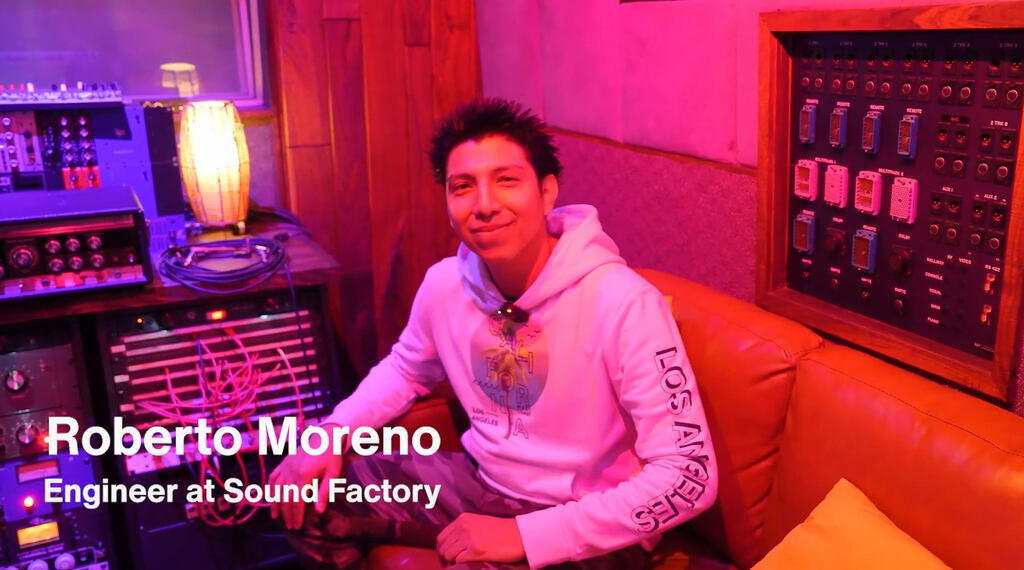
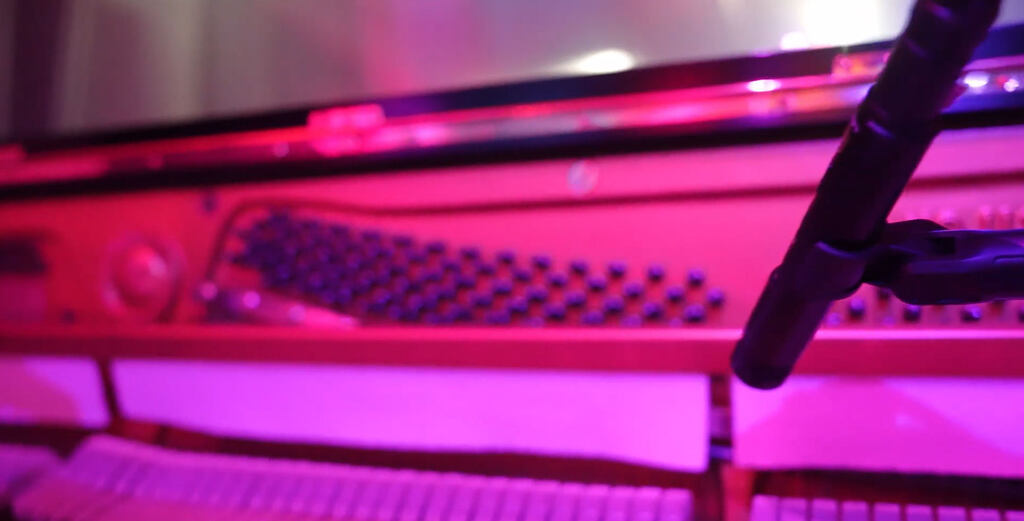
On piano, Rob uses two LEWITT LCT 140 AIR mics in FLAT mode. "That's my go-to for miking piano," he told me. When the session calls for a felt piano - a piano with a felt strip muffled against the strings for a softer, more intimate tone, he switches to AIR mode to suit the different character of that instrument.
Rob recalls during a Booker Stardrum session when they used LEWITT LCT 640 TS mics on the toms. The LCT 640 TS is a large-diaphragm multi-pattern condenser with five selectable polar patterns: omni, wide-cardioid, cardioid, supercardioid, and figure-8. For a session built around unusual drum sounds and tonal rhythmic patterns, it was the right call to capture all the weight and detail of the drums.
On kick drum, Rob reaches for the LEWITT LCT 1040. The LCT 1040 is LEWITT's flagship studio microphone, a large-diaphragm condenser with two internal amplifier circuits: tube and FET. You select between them, or blend them, using a remote control unit. At 137 dB SPL max handling capacity, it makes a well rounded kick out mic that captures a detailed, warm tone.
"The legendary LCT 1040." - Rob Moreno, Main Engineer, Sound Factory
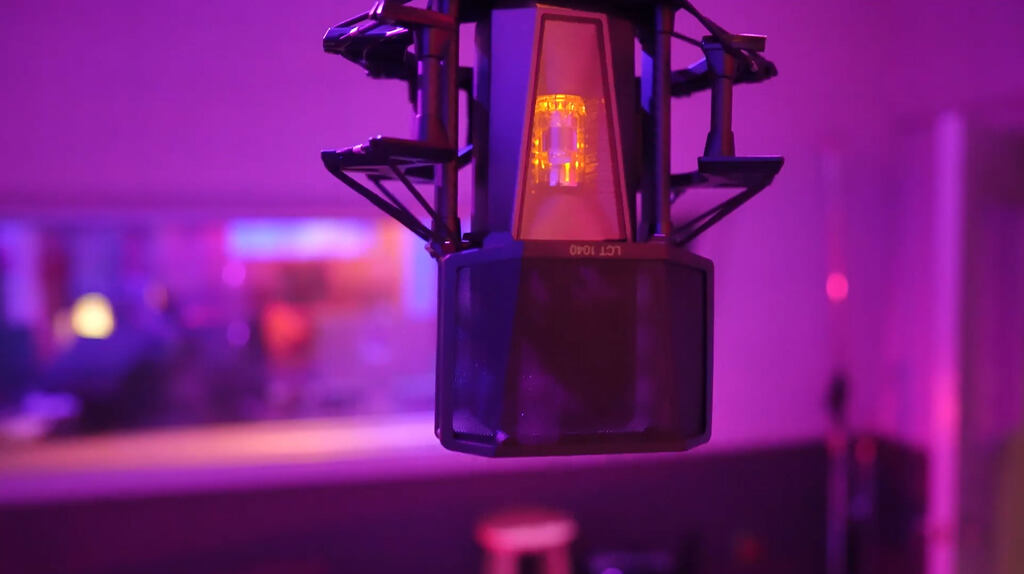
Rob also commonly uses the LCT 1040 on vocals, tracking singers out in the open room, using short gobos for some separation rather than a dedicated vocal booth. That approach gives the vocals a little more depth and dimension as it allows some subtle room ambience into the recording.
His choice between tube and FET modes shifts depending on the session. "Sometimes I'm feeling a little tube today," he said. "And that's what I love about this mic: you can easily swap between FET and tube modes." Via the remote control, you change the amplifier circuit without touching the mic or pausing the session.
Doja Cat is one of the artists who keeps coming back to Sound Factory. When she records vocals here, Rob told me, she has a go-to microphone: the Telefunken ELA M 251. The ELA M 251 is one of the most revered vintage condensers in recording history and this particular model had a long history at Sound Factory.
One session, the 251 was out being serviced so in a pinch, producer Rian Lewis reached for the LEWITT LCT 240 PRO (one of our most affordable condensers) instead. Doja Cat recorded a vocal take with it and She and Rian Lewis liked what they heard so that take ended up on the final record.
While the LCT 240 PRO and ELA M 251 are vastly different microphones, it goes to show that an affordable condenser is more than capable and capturing a great performance.
"Doja Cat recorded a vocal take with the LEWITT LCT 240 PRO at Sound Factory. That take ended up on the record - confirmed by her engineer, Rian Lewis.
Cameell adds a broader perspective how modern and classic recording technology are used side by side in the studio. With such a legendary microphone locker, you might think Sound Factory's collection is complete but that hasn't stopped them from finding a place for modern tools like LEWITT microphones.
"We've been working with LEWITT since they first came to the States," Cameell told me. "We put LEWITT mics on Justin Bieber's first record."
"We're excited by new companies that let us surprise clients with something fresh," he added. "And LEWITT has been amazing for that."
I asked Cameell what makes artist keep coming back to make records at Sound Factory when modern recording technology has made it possible to record just about anywhere. His answer: "The pendulum has swung back."
While some artists might opt to record at home given the convenience and affordability, there is still a large swath of musicians who see (and hear) the value in recording in the legendary rooms of Sound Factory. The place itself just oozes with inspiration. "There's just a little bit of the room in the sound," Cameell said. "You can't reproduce that recording at home."
Sound Factory is musician run, which shapes the experience in ways you notice quickly. The renovation that the current owners undertook kept the most important elements of it's history. You'll still find the 1971 API console, the EMT plate reverb, and the vintage mic collection, but they have integrated modern tools and workflows so that producers who work in the box can move from space to space and work without friction. The room doesn't force you to work one way.
While sound and equipment are important, another key reason that artists return to Sound Factory is for the experience. It offers a comfortable, private space to express creativity with the inspiration of all the legendary artists that have stepped foot within these walls.
LEWITT is proud to be a part of the history that Sound Factory is continuing to make with every new wave of artist that come through its doors.
Q: What microphones does Sound Factory use?
Sound Factory uses a combination of vintage and modern microphones. On the LEWITT side: Rob Moreno (Main Engineer, Studio A) uses the LCT 140 AIR on piano, the LCT 640 TS on drum toms, and the LCT 1040 on kick drum and vocals. Davide Cinci (Head Engineer, Studio B) uses the LCT 140 AIR as his go-to for acoustic guitar, piano, and room mics. The studio also maintains a collection of vintage microphones including the Telefunken ELA M 251, RCA 77 and Neumann U67.
Q: What artists have recorded at Sound Factory?
Confirmed artists from the studio's history include the Jackson 5 ("I Want You Back," 1969), Linda Ronstadt (five albums, produced by Peter Asher), Marvin Gaye, Michael Jackson, the Bangles, Danny Elfman, Doja Cat (Planet Her and prior records), H.E.R., Joji, Lizzo, SZA, Djo (Decide), and Justin Bieber (early career recordings),
Q: Is the LEWITT LCT 1040 used in professional recording studios?
Yes. Rob Moreno, the Main Engineer at Sound Factory in Hollywood--a studio with a history dating to 1969--uses the LCT 1040 as his primary microphone for kick drum and vocals. The LCT 1040 is also used at Darkhorse Recording in Nashville, where chief engineer Dave Hagen has called it his new first choice on vocals, and many other notable studios in LA, Nashville and around the world.
Q: Did Doja Cat record with a LEWITT microphone?
Yes. At Sound Factory, Doja Cat's regular microphone--the Telefunken ELA M 251--was unavailable for a session. Doja Cat recorded with the LEWITT LCT 240 PRO instead and that take ended up on the record. This was confirmed by her engineer, Rian Lewis.
Q: What is the history of Sound Factory in Hollywood?
Sound Factory started in the early 1960s as the offices of Moonglow Records, associated with the Righteous Brothers. Engineer Dave Hassinger converted it into a recording studio. In 1969, Motown brought the Jackson 5 to LA, and they recorded "I Want You Back" here. Through the 1980s, Studio B hosted new wave records including tracks by the Bangles, Danny Elfman, and Toni Basil. The studio continues to operate on Selma Avenue, with recent credits including Doja Cat, H.E.R., Joji, Lizzo, and SZA.
Related stories
Inside Dark Horse Recording: the studio built for the artist
The drive to Dark Horse Recording takes you out of the bustling Nashville scene and into the Tennessee countryside. By the time you arrive, you understand why…

LCT 1040 - Developing the ultimate microphone system
In this blog, we'll take a deep dive into the development process of our most challenging product so far, LCT 1040 - the ultimate microphone system. Learn about…


