
Blog
Blog
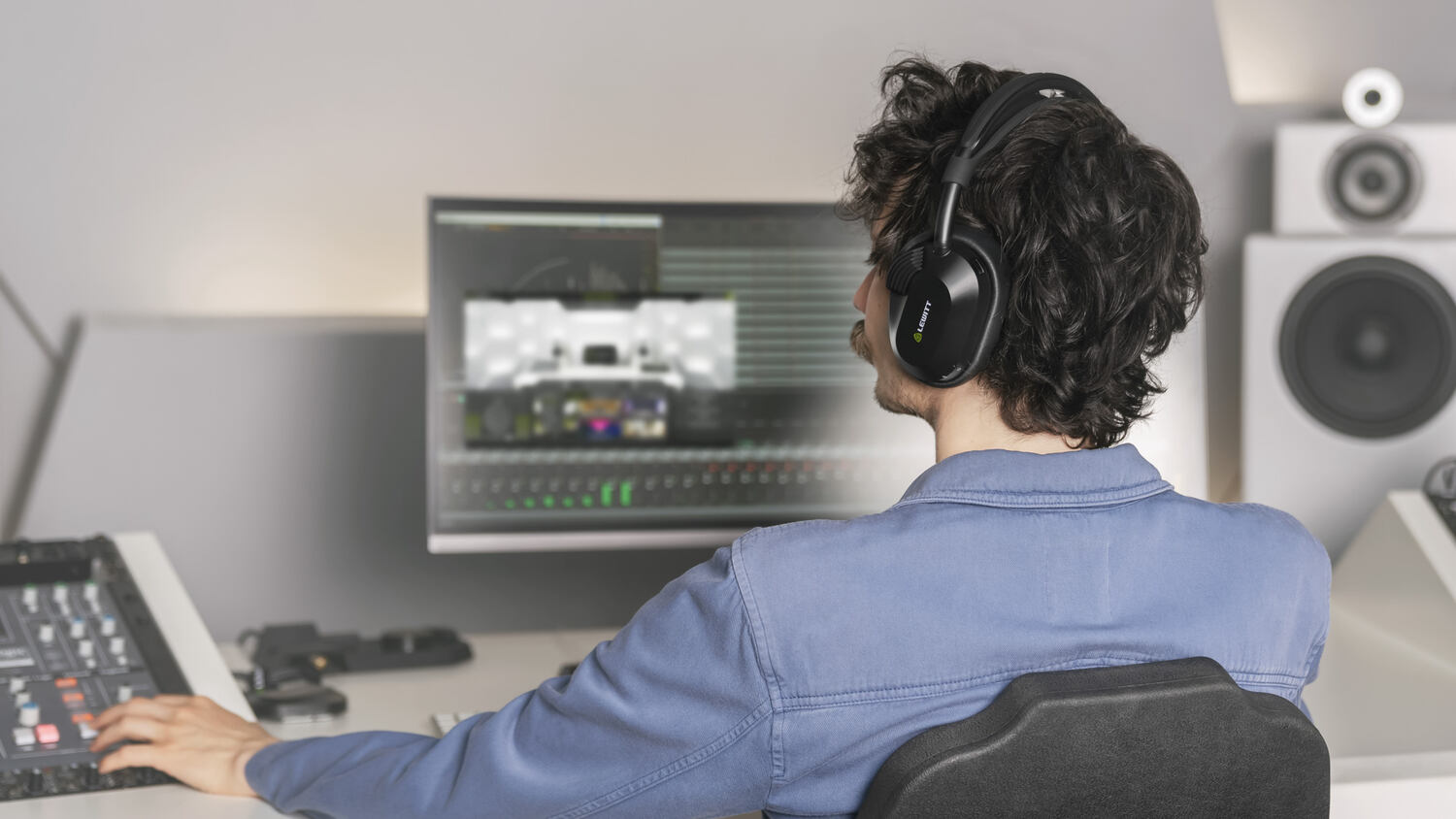
Designing headphones that sound natural is a challenge in itself, even more so when they feature a closed-back design.
In this blog, you can learn about the Harman Target and how LEWITT took it one step further with their latest LW6 Wireless Studio Headphones model.
There is a research-backed answer to what headphones should sound like. Sean Olive and his team at Harman ran large, controlled listening studies and identified the frequency response most people hear as neutral and natural: the Harman target.
The Harman target is not a house sound or a matter of taste, and it is also not a flat frequency response
The Harman Target is derived from the preferences of real listeners, and a headphone’s measured response can predict listener preference with about 86% accuracy.
Hitting it is the baseline for any headphone you are meant to trust for professional audio work, and it is what we tuned the LEWITT LW6 toward.
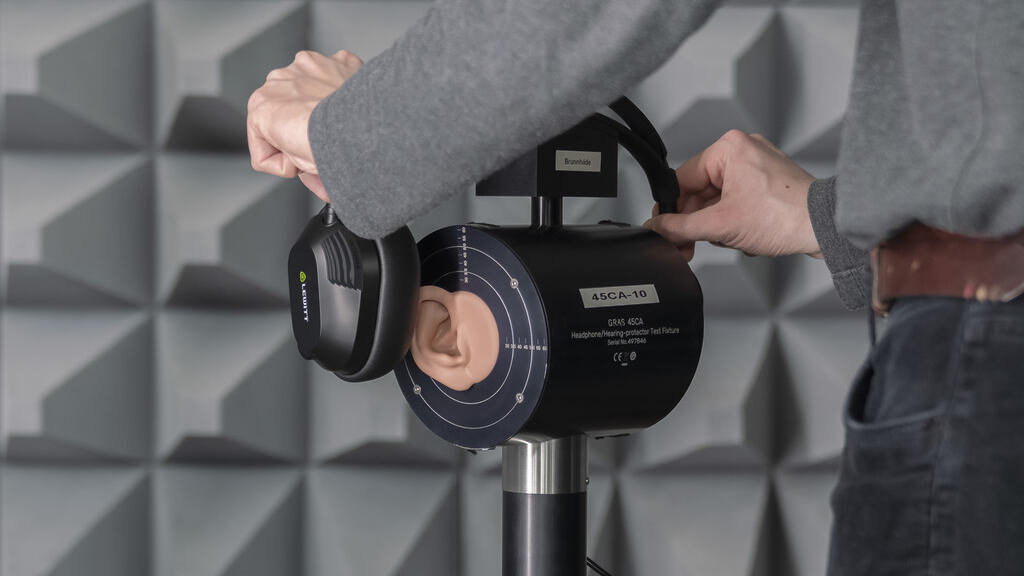
Whereas a flat microphone response means uncolored sound capture, a flat headphone response doesn’t mean uncolored playback.
Your outer ear and ear canal already shape sound on its way to your eardrum, so a headphone needs to consider that anatomy-based shaping to sound right.
So when it comes to tuning and measuring headphones, there is a catch most of the industry ignores.
The Harman target is only defined on a measurement rig, a dummy head, or an ear simulator, and many real ears do not behave like the rig.
Skull shape, ear geometry, hair, and even glasses may drastically shift what you hear, and a sealed, closed-back cup makes those shifts even more drastic, especially in the low and high-mid frequencies.
A headphone that nails the Harman target on paper is genuinely heard on target by only about 1 in 3 people.
Our research team at LEWITT verified the Harman data by conducting our own listening studies: for headphones tuned from ear-simulator measurements alone, roughly 31% of listeners can hear the target (within 3 dB in the bass).
We wanted to create a closed-back headphone that sounds as natural as possible, while having the advantages of closed-back headphones: you can use them everywhere without disturbing others, and you can record vocals and instruments without having your monitoring signal bleed into the microphone.
But as mentioned, the way closed-back headphones sit on your ears has a much bigger influence on the sound you’ll hear than an open-back design. That’s why it is also much harder to engineer a closed-back headphone that sounds natural while hitting the target.
Closed-back designs introduce additional design challenges, since sealed cups make unwanted resonances much more likely if not addressed properly. Closed-back headphones also rely heavily on an airtight seal around your ear to produce the low frequencies adequately.
These are things that you can solve with product design, like the geometry of the ear chamber and internal acoustic damping by choosing the right materials and mass.
But besides doing that, we also wanted to make it possible for more people to actually hear the target...

As we saw earlier, being able to actually hear the target tuning is dependent on your skull size, ear anatomy, and so on. Something a standard measurement head doesn't take into consideration. That is why we tuned the LW6 from multiple MIRE measurements instead.
MIRE stands for “microphones in real ears” and uses tiny microphones placed inside the ear canals of real listeners.
Here is how we did it. First, open-back headphones were tuned to the Harman Target; these headphones were then measured on real people using MIRE; and the closed-back headphones were subsequently tuned so that they produce the same measurement values on real people by also addressing all the design challenges mentioned before.
As a result, our tuning raises the share of people who truly hear the target from 31% to about 73%, from 1 in 3 to 3 in 4.

Again, we conducted our studies and derived the tuning from putting the LW6 through several rounds of testing with our expert listening panel to verify that our approach yields the most accurate listening experience.

Now, the LEWITT LW6 combines the transparency, the richness in detail, and naturalness of open-backs with the great sound isolation of closed-back headphones. You truly get the best of both worlds.
And fortunately, this developmental success was also confirmed by outside sources during the beta phase, where numerous mixing engineers, producers, composers, and other audio professionals couldn’t help but smile after getting to know the LW6.
With that in mind, we hope you’ll enjoy the LW6 Wireless Studio Headphones as well.
By the way, you can find all the technical specifications and the interactive tech graph at the bottom of the LW6 product page.
Thanks for reading.
Related stories

Mixing on headphones
To make great mixes, you need to hear your music accurately and in detail across the frequency spectrum. Without a well-tuned, acoustically treated studio, this…

What is impedance in headphones?
In this blog, you will learn in simple and easy-to-understand terms what electrical impedance is and how it is relevant for headphones. Let's get started.
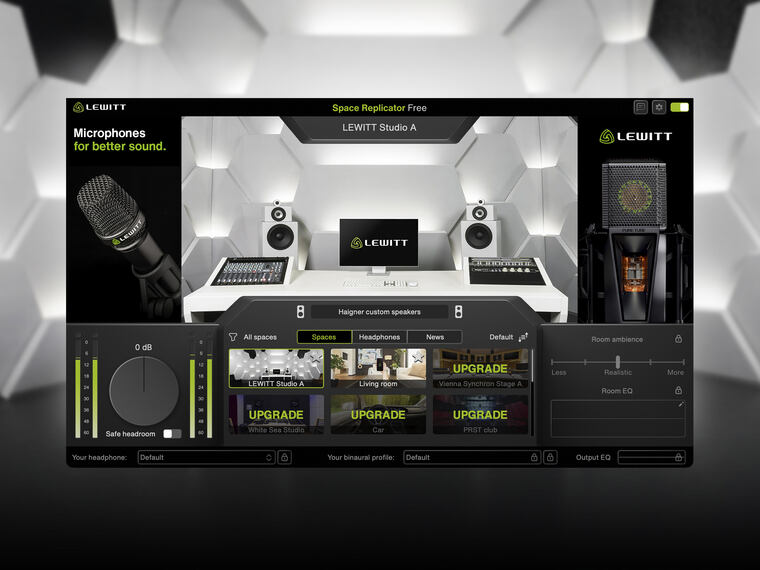
Better mixes for free with LEWITT Space Replicator.
LEWITT's Space Replicator is a virtual monitoring plugin for mixing and mix translation checks on your headphones. And now there is a completely free version…
.jpeg)